Quick Contact

Siba Kimya was founded in 2004 to produce environmentally friendly, high-tech insulation materials, adhesives, and industrial chemicals for the construction, PVC and aluminum, hardware, furniture, and automotive sectors.

How Long Does It Take for Polyurethane Foam to Dry and Cure?

How Long Does It Take for Polyurethane Foam to Dry and Cure?

How Long Does It Take for Polyurethane Foam to Dry and Cure?

How long does it take for polyurethane foam to dry and cure? Find out how long it takes for the foam to dry on the surface, become cutable, and fully harden, along with how application conditions affect these times.

How Long Does It Take for Polyurethane Foam to Dry and Cure?

Polyurethane foams are products widely used in the building and construction industries for gap filling, insulation, and assembly applications. After application, the drying and curing times of the foam are important for ensuring the quality of the process and planning subsequent steps. These times may vary depending on the product’s formulation, ambient temperature, humidity, and application thickness.

How Long Does Polyurethane Foam Take to Dry?

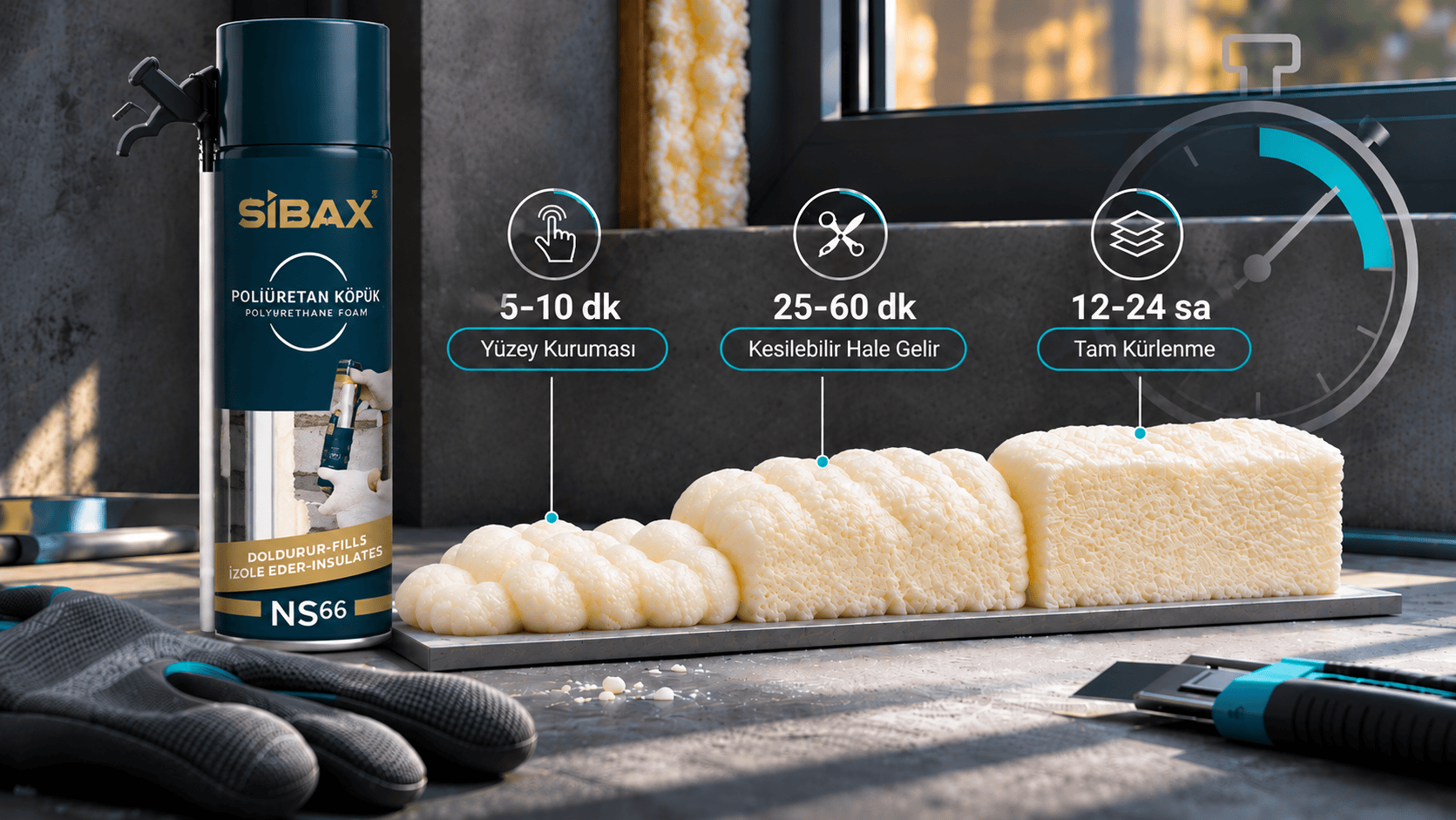
Surface drying in polyurethane foam typically begins within the first few minutes after application. Many single-component polyurethane foams can reach touch-dry condition within approximately 5–10 minutes under suitable conditions. However, surface drying does not mean that the interior of the foam has fully hardened.

Curing Time of Polyurethane Foam

Curing is the process by which polyurethane foam reacts with moisture, causing its internal structure to harden and acquire its final properties. Depending on the product, the foam may become cutable within approximately 25–60 minutes. Full curing, however, can take approximately 12–24 hours for many standard products. This time may be longer for thick applications or under unsuitable environmental conditions.

How Long Does It Take for Polyurethane Foam to Dry and Cure?

Factors Affecting the Curing Time of Polyurethane Foam

The curing and hardening time of polyurethane foam is directly affected by the conditions of the application environment. In particular, temperature, humidity, and the thickness of the applied foam play a decisive role in this process. Appropriate temperature and sufficient humidity help ensure proper curing, while low temperature and insufficient humidity can prolong the process.

In dense foam layers applied to deep cavities, it may take longer for the inner sections to harden. Therefore, following the product’s technical instructions is crucial for both managing the curing time and achieving the desired insulation performance.

When Can Polyurethane Foam Be Cut and Painted?

Polyurethane foam can be cut and shaped once it has reached sufficient hardness. It is recommended to wait for the time specified in the product’s technical data sheet before cutting. For subsequent processes such as painting and coating, it is important that the foam is fully cured. Interventions performed too early may cause deformation in the foam’s structure.

What Should Be Considered for Proper Drying and Curing?

In polyurethane foam applications, the surface must be clean, environmental conditions must fall within the product’s recommended ranges, and the appropriate amount of foam must be used. Lightly moistening the surface in accordance with the manufacturer’s instructions may also promote curing in some products.

In SİBAX’s polyurethane foam solutions for construction and installation applications, selecting the right product and using appropriate application methods helps achieve efficient results in gap-filling and insulation processes.